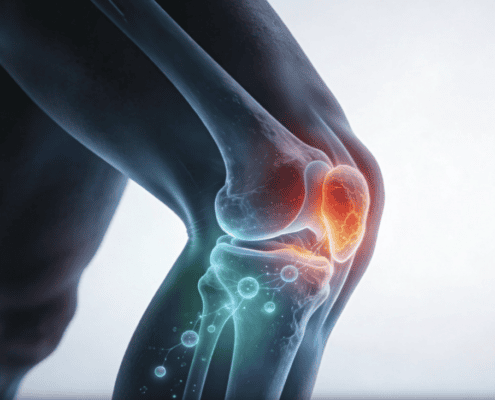
Osteoarthritis (OA) is the most common form of arthritis. It develops when the smooth cartilage that cushions a joint wears down. That cartilage is what lets bones glide instead of grind. As it thins, the joint can become stiff, swollen, and painful.
OA most often shows up in the knees, hips, spine, neck, shoulders, and hands—but it can affect almost any joint. Many people first notice an ache after activity, stiffness after sitting, or a joint that no longer moves as freely as it used to.
As the cushioning decreases, nearby tissues take more stress. Ligaments, joint lining, and supporting muscles work harder, which can add tightness, swelling, and a deep, aching pain. Over time, bones may rub with less protection, and bone spurs can form around the joint.
OA often starts as a mild discomfort you can push through. Left unaddressed, it can progress and make walking, climbing stairs, gripping, turning, or sleeping more difficult. The goal of care is to protect what cartilage remains, calm inflammation, slow degeneration and help the joint move with less pain so you can stay active.