
Knee osteoarthritis (OA) can make everyday activities—from walking and exercising to hiking and skiing—painful and difficult. While conventional treatments such as physical therapy, medications, and injections can help manage symptoms, some patients continue to experience persistent pain and reduced mobility.
Stem cell therapy is an emerging regenerative medicine approach being studied as a potential treatment option for knee osteoarthritis. Research suggests that certain cell-based therapies may help reduce pain and improve physical function, although results vary and more research is needed to determine which patients benefit most.
In this article, we explore how stem cell therapy may be used for knee OA, what current research shows, what patients can expect, and important factors to consider before treatment.
What Is Stem Cell Therapy for Knee Osteoarthritis?
Stem cell therapy for knee osteoarthritis typically involves injecting cells into or around the affected knee joint.
One of the most commonly studied cell types is mesenchymal stromal/stem cells (MSCs). These cells have attracted interest because of their potential effects on inflammation and tissue repair.
Depending on the treatment approach, cells may be obtained from sources such as:
- Bone marrow
- Adipose (fat) tissue
- Donor-derived cellular products
- Biological materials used in regenerative medicine
Some protocols may also combine cell-based treatments with platelet-rich plasma (PRP) or extracellular matrix products.
The goal is not simply to “replace” damaged cartilage. Rather, researchers are investigating whether these treatments can influence the joint environment, reduce inflammation, improve symptoms, and potentially support tissue health.
For more information, visit Cendant Health’s Orthopedics & Regenerative.
How Does Stem Cell Therapy Work?
The exact mechanism of action is still being studied.
MSCs appear to interact with surrounding cells and may release signaling molecules that influence inflammation and tissue repair. Researchers are particularly interested in their potential immunomodulatory and regenerative effects.
It is important to understand, however, that the idea that injected stem cells simply turn into new cartilage inside the knee is an oversimplification. Current research suggests that their effects may involve complex interactions with the existing joint environment.
What Does the Research Say?
Clinical research into stem cell therapy for knee osteoarthritis has grown substantially over the past several years.
Several randomized controlled trials and systematic reviews have reported improvements in pain and physical function following certain MSC-based treatments.
Some meta-analyses have found improvements lasting 12–24 months in selected patient populations. Other studies have reported favorable outcomes compared with treatments such as hyaluronic acid.
However, results have not been consistent across every clinical trial.
Differences in:
- Cell source
- Cell preparation
- Cell dose
- Injection technique
- Patient characteristics
- Severity of osteoarthritis
- Follow-up period
can all affect study outcomes.
The Bottom Line on Current Evidence
Stem cell therapy is promising but still an evolving area of medicine. It should not be described as a guaranteed cure for osteoarthritis or as a proven way to permanently regrow damaged cartilage.
Patients should discuss the available evidence, potential benefits, limitations, and alternatives with a qualified healthcare professional.
Is Stem Cell Therapy Safe?
Safety is one of the most important considerations when evaluating any regenerative medicine treatment.
Clinical studies of intra-articular MSC therapies have generally reported adverse effects such as:
- Temporary knee soreness
- Swelling
- Injection-site discomfort
- Short-term inflammation
Serious complications have been uncommon in many controlled studies, although no medical procedure is completely risk-free.
Safety can also depend on the source and processing of the cells, the treatment protocol, the injection technique, and the patient’s individual health.
For this reason, patients should seek treatment from appropriately qualified medical professionals and ask exactly what type of cellular product is being used.
Who May Be a Candidate for Stem Cell Therapy?
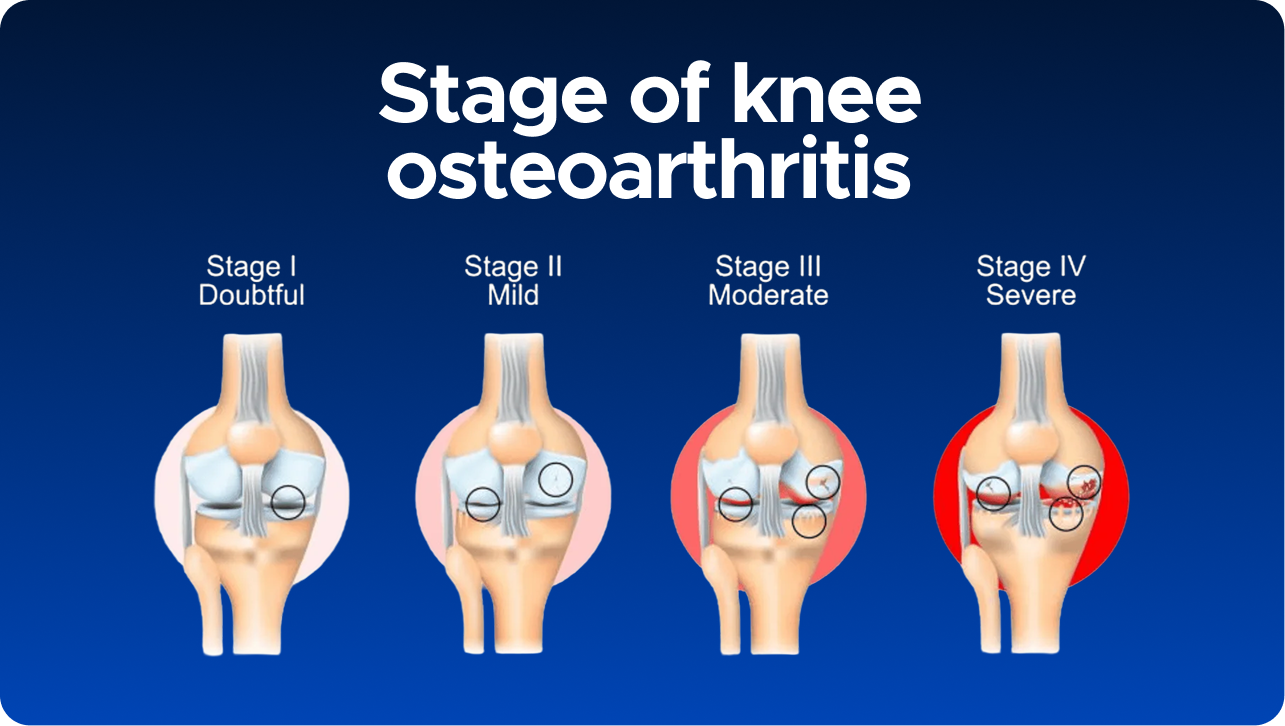
Stem cell therapy may be considered by patients with mild-to-moderate or moderate knee osteoarthritis, particularly those who continue to experience symptoms despite conservative treatment.
Potential candidates may include people who:
- Experience ongoing knee pain
- Have difficulty with exercise or recreational activities
- Have not achieved adequate relief from conservative treatments
- Want to explore non-surgical options
- Are looking to understand alternatives before considering surgery
However, not everyone with knee osteoarthritis is a suitable candidate.
A comprehensive medical evaluation may include a review of symptoms, medical history, physical examination, and imaging such as X-rays or MRI when appropriate.
Real-World Patient Experience
For many patients, the most important question isn’t simply whether a treatment improves a clinical score. It’s whether they can return to the activities they value.
Consider an anonymized 58-year-old male patient with moderate knee osteoarthritis and a partially torn meniscus.
After discussing his treatment options and the possibility of eventual knee replacement, he elected to undergo a regenerative treatment protocol.
His treatment involved a combination of autologous bone marrow and adipose-derived cellular products, along with PRP, extracellular matrix, and donor-derived cellular products.
Following treatment, he reported gradual improvements in pain and mobility beginning several weeks after the procedure. Over the following months, he was able to increase his activity level.
Eventually, he returned to recreational skiing for half-days on weekends—an activity he had struggled to enjoy for several years.
An Important Note About Patient Stories
Individual patient experiences can be encouraging, but they do not predict or guarantee the results of future patients.
Outcomes can vary based on the severity of osteoarthritis, overall health, treatment protocol, rehabilitation, activity level, and many other factors.
To explore additional patient experiences, visit Cendant Health’s Patient Video Testimonials.
Potential Benefits of Stem Cell Therapy
For patients who respond to treatment, potential benefits may include improvements in:
Pain
Some clinical studies have reported reductions in knee pain following MSC treatment.
Physical Function
Patients in clinical trials have reported improvements in mobility and daily physical activities.
Quality of Life
Improved symptoms may make it easier to participate in exercise, hobbies, work, and family activities.
Potential Structural Effects
Some studies have investigated MRI changes following treatment, including cartilage-related measures. However, the significance and durability of these structural findings remain an active area of research.
What Can You Expect After Treatment?
Recovery varies from patient to patient and depends on the specific treatment performed.
First Few Days
Temporary soreness, swelling, or discomfort may occur following the injection or procedure.
First Several Weeks
Some patients may begin noticing changes in pain or mobility, while others may require more time before experiencing meaningful improvement.
3–6 Months
For patients who respond to treatment, improvements may continue developing over several months, particularly when treatment is combined with an appropriate rehabilitation program.
Long-Term
Research has reported benefits lasting one to two years or longer in some patients, but the duration of improvement varies.
There is currently no reliable way to guarantee that a particular patient will experience a specific duration of relief.
Stem Cell Therapy vs. Traditional Knee OA Treatments
Stem cell therapy is one option among several approaches used to manage knee osteoarthritis.
Depending on the patient’s condition, treatment options may include:
- Physical therapy
- Strengthening and exercise programs
- Weight management when appropriate
- Pain-relief medications
- Corticosteroid injections
- Hyaluronic acid injections
- Bracing and other supportive treatments
- Surgical procedures
- Total knee replacement for appropriate patients
The right treatment depends on the severity of osteoarthritis, symptoms, lifestyle, medical history, and individual goals.
Can Stem Cell Therapy Prevent Knee Replacement?
This is one of the most common questions patients ask.
At present, there is not enough evidence to guarantee that stem cell therapy can prevent or permanently delay knee replacement.
For some patients, improving symptoms and maintaining function may help postpone more invasive treatment. However, advanced osteoarthritis may eventually require surgery regardless of previous non-surgical treatments.
A qualified orthopedic or regenerative medicine specialist can help determine where regenerative treatment fits within an individual’s overall treatment plan.
Is Stem Cell Therapy Right for You?
Stem cell therapy for knee osteoarthritis is an exciting and rapidly developing area of regenerative medicine.
Research suggests that certain cell-based therapies may provide improvements in pain and function for some patients. At the same time, significant questions remain regarding the ideal cell source, dosage, treatment protocol, long-term effectiveness, and ability to regenerate damaged cartilage.
If knee osteoarthritis is limiting your ability to work, exercise, travel, or enjoy your favorite activities, speaking with a qualified healthcare professional can help you understand your options.
Learn more about Cendant Health and its approach to regenerative medicine on the Cendant Health.
Stem Cell Therapy for Osteoarthritis at Cendant Health
At Cendant Health, treatment plans are tailored to each patient’s condition, goals, and medical history.
Our Locations
Denver, Colorado : 720.338.4491
Houston, Texas : 713.552.3142
Aspen, Colorado : 970.889.2318
Grand Junction, Colorado : 970.270.8501
Fort Collins, Colorado : 970.829.9012
Durango, Colorado : 970.567.8258
Colorado Springs, Colorado : 720.338.4491
Oklahoma City : 720.338.4491
Lubbock, Texas : 806.500.9948
Omaha, Nebraska : 402.612.2662
Scottsdale, Arizona : 602.834.3997
For complete clinic information, visit the Cendant Health Service Areas.
Ready to Explore Your Options?
If knee osteoarthritis is affecting your mobility or keeping you from the activities you enjoy, regenerative medicine may be an option worth discussing with a qualified medical professional.
Contact Cendant Health to Schedule a Consultation
Learn whether stem cell therapy may be appropriate for your knee osteoarthritis.
Frequently Asked Questions
How long does stem cell therapy for knee OA take to work?
Results vary. Some patients may notice changes within several weeks, while others may require several months before experiencing meaningful improvement.
How long do the results last?
Clinical studies have reported improvements lasting 12–24 months or longer in some patients. However, the duration varies and cannot be guaranteed.
Does stem cell therapy regrow knee cartilage?
Research is investigating potential cartilage-related and structural effects, but it is not currently appropriate to guarantee that stem cell therapy will regrow damaged cartilage.
Is stem cell therapy an alternative to knee replacement?
For some patients, regenerative treatment may be considered before surgery. However, it cannot be guaranteed to prevent or replace knee replacement, particularly in advanced osteoarthritis.
Are there risks associated with stem cell injections?
As with any medical procedure, risks exist. Temporary soreness, swelling, and discomfort are among the commonly reported effects. Patients should discuss potential risks with their healthcare provider before treatment.
How do I know if I am a candidate?
A healthcare professional can evaluate your symptoms, medical history, imaging, and overall health to determine whether regenerative treatment may be appropriate.
Medical Disclaimer
This article is provided for educational and informational purposes only and is not intended to provide medical advice, diagnosis, or treatment recommendations.
Stem cell and regenerative medicine treatments are an evolving area of research, and individual results may vary. The information presented here should not be interpreted as a guarantee of treatment outcomes.
Always consult a qualified healthcare professional regarding your specific medical condition and treatment options.