
Multiple sclerosis affects nearly one million people in the United States. It is a chronic disease of the central nervous system in which immune activity damages myelin, the protective covering around nerve fibers. Most people are diagnosed between ages 20 and 50, although MS can occur outside that age range as well.
There is currently no cure for MS. Modern disease-modifying therapies can reduce relapses and inflammatory disease activity for many people, but some patients continue to experience active disease despite treatment. That has made stem cell based approaches an important area of research.
The term stem cell therapy for MS, however, can describe very different procedures. The best established option is autologous hematopoietic stem cell transplantation, usually called AHSCT or HSCT. Other approaches, including mesenchymal stem cells, remain under investigation and should not be assumed to offer the same benefits.
Understanding that difference is essential when evaluating what stem cell therapy may realistically offer someone living with MS.
What Does Stem Cell Therapy Mean for Someone With MS?
Stem cell treatment is not a single therapy. Different types of stem cells are being studied for different purposes, and the evidence supporting them varies considerably.
People researching MS treatment will most often encounter two categories.
Autologous Hematopoietic Stem Cell Transplantation
Autologous hematopoietic stem cell transplantation, or AHSCT, uses a person’s own blood-forming stem cells.
The goal is not primarily to replace damaged brain cells. Instead, AHSCT uses chemotherapy to suppress or remove much of the immune system responsible for inflammatory attacks. Previously collected blood-forming stem cells are then returned to the patient so the immune system can rebuild.
In simple terms, researchers are trying to reset the immune system rather than directly repair damaged nerves.
For readers unfamiliar with these concepts, our guide to stem cell therapy and regenerative medicine provides broader background on regenerative treatment terminology.
Mesenchymal Stem Cells
Mesenchymal stem cells, often shortened to MSCs, are being studied for different reasons. Researchers are interested in their possible effects on inflammation, immune regulation, neuroprotection, and tissue repair.
Clinical research continues, but the evidence is much less established than it is for AHSCT in selected patients with highly active relapsing MS. A 2025 systematic review found encouraging signals in some studies but also emphasized uncertainty around long-term effectiveness, dosing, administration methods, and treatment protocols.
That distinction matters. A clinic offering a treatment described simply as “stem cells for MS” may not be offering the same procedure studied in major AHSCT trials.
Why Stem Cell Treatment Is Being Studied for Multiple Sclerosis
To understand the possible benefits of stem cell therapy, it helps to understand what drives MS.

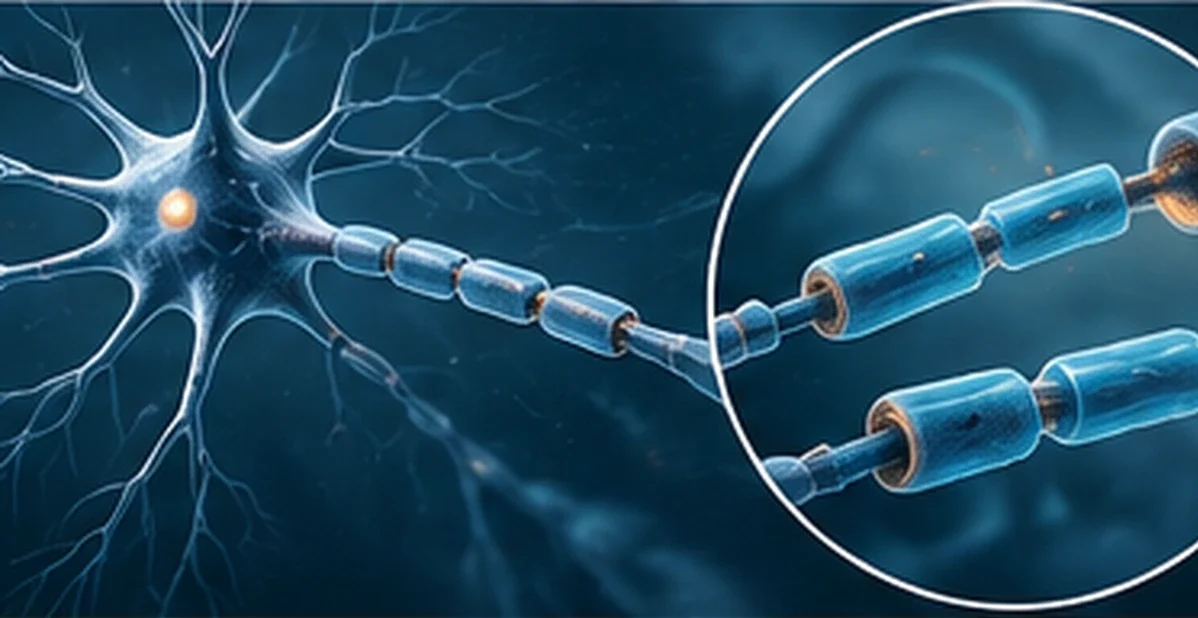
The immune system normally protects the body from infection. In MS, immune activity mistakenly targets structures within the central nervous system, including myelin. Inflammation can interfere with communication between the brain, spinal cord, and the rest of the body.
People may experience symptoms such as:
- Fatigue
- Vision problems
- Numbness or tingling
- Muscle weakness
- Problems with balance
- Walking difficulties
- Muscle stiffness or spasms
- Changes in bladder or bowel function
- Cognitive difficulties
The symptoms and disease course can vary significantly from one person to another.
Our multiple sclerosis treatment information explains the condition in greater detail, while our broader neurological services cover other disorders involving the brain, spinal cord, and peripheral nervous system.
Stem cell research is particularly interesting in MS because researchers are studying whether cellular treatments can address immune activity, inflammation, or eventually aspects of nervous system repair.
AHSCT May Reduce Relapses in Carefully Selected Patients
One of the clearest potential benefits of AHSCT is its ability to suppress the inflammatory activity responsible for MS relapses.
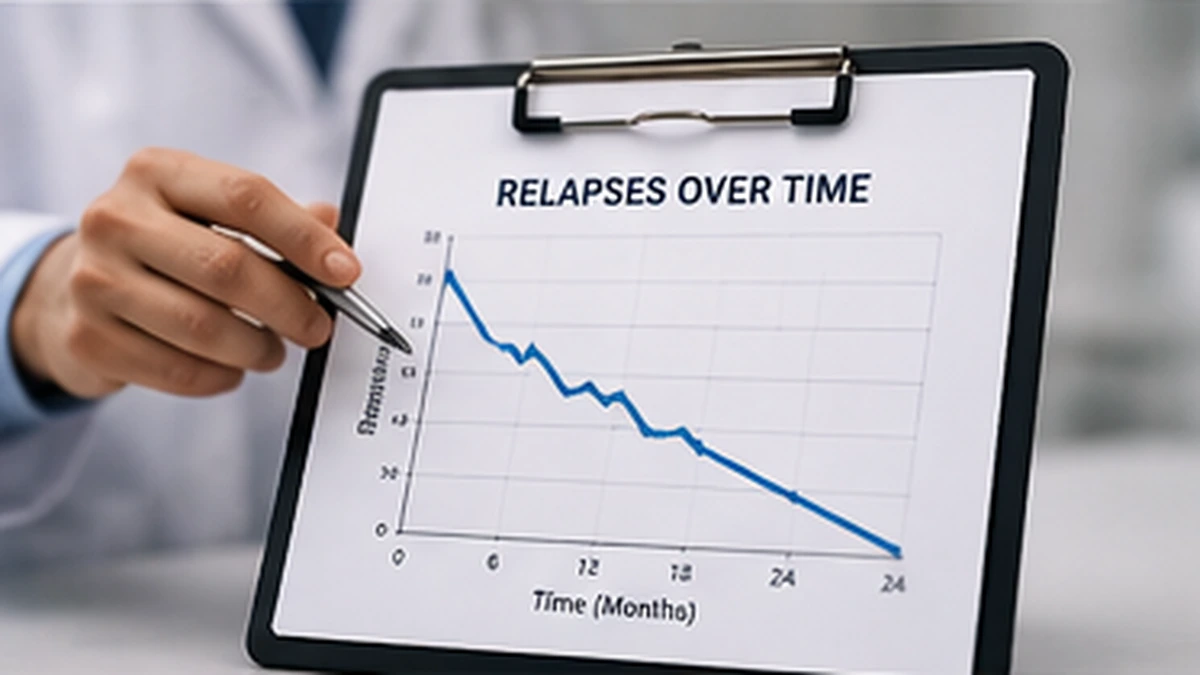
This appears most relevant in people with highly active relapsing-remitting multiple sclerosis, especially when relapses or new MRI lesions continue despite disease-modifying treatment.
The randomized MIST trial compared nonmyeloablative HSCT with continued disease-modifying therapy in 110 adults with relapsing-remitting MS. Participants had experienced at least two relapses while receiving treatment during the previous year.
Disease progression occurred in 3 patients assigned to HSCT compared with 34 assigned to disease-modifying therapy during the study’s follow-up period. The researchers concluded that HSCT significantly prolonged time to disease progression, while also stressing that the study was preliminary and that further research was needed.
These findings are one reason AHSCT has become a serious treatment consideration for certain people with aggressive relapsing disease rather than merely an experimental idea.
Stem Cell Transplantation May Suppress New Inflammatory Disease Activity
Relapses are only one way clinicians evaluate MS.
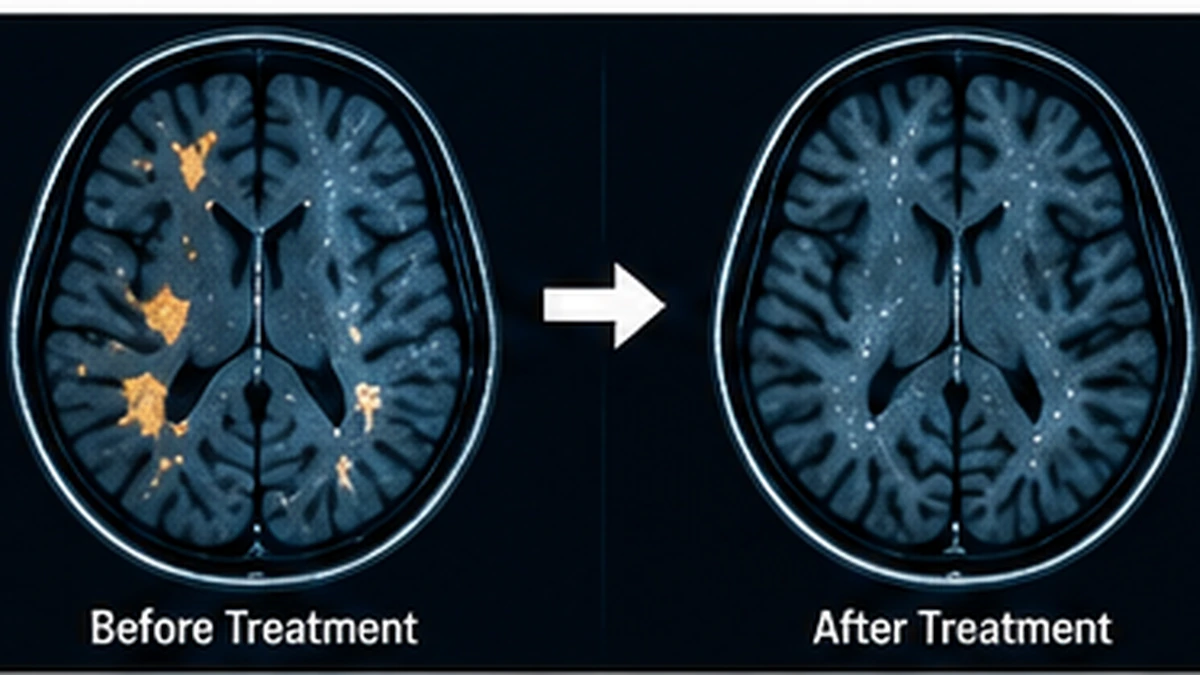
MRI scans can reveal new or enlarging lesions even when a person does not notice an obvious relapse. Because of this, controlling inflammatory activity on imaging is another important treatment goal.
AHSCT is designed to suppress the immune response that contributes to this inflammation.
International recommendations published in 2025 describe AHSCT as a treatment option for relapsing forms of MS that remain active despite disease-modifying therapy. The recommendations identify aggressive relapsing-remitting MS after failure of high-efficacy treatment as a generally accepted indication, while acknowledging that questions remain about where AHSCT should fit within the overall treatment sequence.
For an individual patient, the value of reducing new inflammatory activity depends heavily on disease type, previous treatments, current MRI findings, age, disability level, and overall health.
AHSCT Could Delay Disability Progression for Some People
Repeated inflammatory attacks can contribute to neurological damage over time. Preventing those attacks may therefore help some people preserve function for longer.
The MIST trial found a longer time to disease progression among participants who received HSCT compared with those who continued disease-modifying therapy. Disability scores also improved on average during the first year in the HSCT group while worsening in the comparison group.
Those findings should not be interpreted as proof that AHSCT reverses permanent neurological damage.
A person’s disability may improve when inflammation settles, when the nervous system partially recovers after a relapse, or when symptoms become easier to manage. Existing nerve loss may remain.
This is why clinicians look carefully at whether ongoing disability is being driven mainly by active inflammation or by established neurodegeneration.
Some Patients May Experience Long Periods Without New Disease Activity
Another potential advantage of AHSCT is the possibility of prolonged periods with little or no detectable inflammatory MS activity.

Instead of taking an ongoing disease-modifying medication indefinitely, AHSCT is generally performed as a defined treatment process followed by extensive monitoring and recovery.
MS organizations reviewing the evidence report that many appropriately selected patients experience long periods without relapses or new MRI activity after AHSCT.
That does not mean MS has been cured.
Disease activity may return, and long-term neurological follow-up remains necessary. The treatment’s appeal comes from the possibility of durable suppression of inflammatory disease in certain patients, not from a guarantee that MS will never become active again.
Can Stem Cells Repair Myelin or Damaged Nerves?
This is one of the most important questions in stem cell research, and also one of the easiest areas for treatment claims to become misleading.
AHSCT Is Primarily an Immune Treatment
AHSCT mainly targets the abnormal immune activity behind inflammatory MS.
It is not currently considered a method for directly replacing neurons or rebuilding extensive nerve tissue. By reducing new attacks, it may create conditions in which the nervous system has a better opportunity to recover from recent inflammation, but that is different from regenerating established neurological damage.
Regenerative Stem Cell Research Has Different Goals
Mesenchymal and other experimental cellular therapies are being investigated partly because researchers want to understand whether they can support neuroprotection, remyelination, or tissue repair.
Recent studies have reported possible biological and imaging signals, but evidence remains inconsistent and often comes from small studies with different cell sources, doses, and administration methods. A 2025 review concluded that larger and better standardized studies are still needed before long-term benefits can be established.
Readers interested in how these different approaches fit together can review our stem cell and regenerative medicine guide.
Who May Be More Likely to Benefit From AHSCT?
AHSCT is not appropriate for every person with MS.
Current expert guidance generally points toward people whose disease still has a strong inflammatory component.

Highly Active Relapsing MS
The strongest evidence concerns people with active relapsing forms of MS who continue to experience relapses or new MRI lesions despite effective disease-modifying therapy.
The European Committee for Treatment and Research in Multiple Sclerosis and the European Society for Blood and Marrow Transplantation now recognize AHSCT as an established option in certain aggressive relapsing-remitting cases after inadequate response to high-efficacy therapies.
Earlier Disease May Offer a Better Opportunity
AHSCT acts primarily against inflammatory immune activity. As MS becomes more dominated by irreversible neurodegeneration rather than active inflammation, the potential benefit may decrease.
For that reason, treatment centers often consider factors such as:
- MS subtype
- Recent relapse history
- New or active MRI lesions
- Previous disease-modifying therapies
- Current disability
- Disease duration
- Age
- General medical health
- Ability to tolerate chemotherapy
No single factor decides eligibility. Assessment should involve specialists experienced in both MS and stem cell transplantation.
Why Progressive MS Is More Complicated
People with progressive MS frequently ask whether stem cell transplantation could restore lost mobility or reverse long-standing disability.
The answer depends partly on whether active inflammation is still present.
AHSCT may have a role for a limited number of people with progressive disease who continue to have inflammatory activity, such as relapses or new MRI lesions. Evidence is much weaker when progression occurs without signs of active inflammation.
This difference makes biological sense.
If immune attacks are still occurring, suppressing the immune system may prevent additional inflammatory injury. If disability is mainly being driven by established nerve and axonal loss, resetting the immune system cannot necessarily restore tissue that has already been damaged.
Someone with progressive MS therefore needs an individualized neurological evaluation rather than assuming that a stem cell procedure used for aggressive relapsing MS will have the same effect.
What Are the Risks of Stem Cell Transplantation for MS?
Any discussion of AHSCT benefits is incomplete without discussing risk.
AHSCT involves intensive immune suppression and chemotherapy. It is very different from receiving a routine injection or infusion.

Infection Risk
During treatment, immune defenses can become extremely weak. Serious infections are therefore one of the major short-term concerns.
Patients require close monitoring while their immune system recovers, and infection precautions may continue after leaving the transplant center.
Fertility and Reproductive Health
Chemotherapy used during AHSCT can affect fertility in both women and men and may cause early menopause.
Anyone considering treatment who may want children in the future should discuss fertility preservation before the procedure.
Other Complications
Potential complications can also include:
- Low blood cell counts
- Bleeding
- Fatigue
- Hair loss
- Gastrointestinal symptoms
- Organ toxicity
- Secondary autoimmune conditions
- Longer-term infection risk
- Rare treatment-related death
Modern transplant techniques and better patient selection have improved safety, but AHSCT remains a significant medical procedure. International guidance recommends treatment through experienced multidisciplinary teams and qualified transplant centers.
AHSCT and Disease-Modifying Therapy Are Not Simple Substitutes
A common misconception is that stem cell transplantation represents the “natural” alternative to MS medication.
That is not an accurate comparison.
Disease-modifying therapies and AHSCT both aim to reduce MS disease activity, but they do so differently and carry different patterns of risk.
DMTs may involve tablets, injections, or infusions given according to a treatment schedule. Depending on the medication, treatment may continue for years.
AHSCT concentrates much of its treatment burden into an intensive transplant process. Chemotherapy suppresses the immune system, stored blood-forming stem cells are returned, and the patient then goes through a period of immune recovery.
Which strategy makes more sense depends on an individual’s disease activity, treatment history, health, personal priorities, and tolerance for risk.
Research continues to compare AHSCT directly with modern high-efficacy MS medications because older studies cannot answer every question about today’s treatment choices.
Not Every Commercial “Stem Cell Treatment” Is the Same as AHSCT
People searching online may encounter clinics advertising stem cell injections, umbilical cord products, Wharton’s jelly, exosomes, or other regenerative products for neurological conditions.
These should not automatically be grouped with the AHSCT evidence discussed in this article.
The U.S. Food and Drug Administration warns that regenerative medicine products marketed as stem cell or related treatments have not been approved to treat neurological disorders such as multiple sclerosis. The FDA has also received reports of serious complications from unapproved regenerative products.
Before considering any treatment marketed as stem cell therapy for MS, ask exactly:
- What type of cells are being used?
- Is this AHSCT or another type of cell therapy?
- What published evidence supports this exact procedure?
- Is the treatment FDA approved for this use?
- Is it being provided through an appropriately regulated clinical trial?
- What complications have been reported?
- Who will manage follow-up care?
- What happens if a serious complication develops?
The phrase “stem cell therapy” alone does not provide enough information to judge whether a treatment is evidence based.
Making Sense of the Potential Benefits of Stem Cell Therapy for MS
Stem cell research has changed the MS treatment conversation, but its benefits need to be described precisely.
For carefully selected people with highly active relapsing multiple sclerosis, AHSCT may substantially suppress inflammatory disease activity, reduce relapses, limit new MRI activity, and delay disability progression. Clinical trials and international recommendations now support considering the procedure in specific patients whose disease remains aggressive despite disease-modifying treatment.
That does not make every stem cell treatment effective for MS.
Mesenchymal and other regenerative cell therapies remain areas of active research. Recent reviews report encouraging signals but also conflicting results, limited sample sizes, and uncertainty about long-term effectiveness. One 2025 meta-analysis pooling different stem cell approaches across randomized trials found no statistically significant overall advantage over control treatment, showing why results cannot simply be generalized across every type of cell therapy.
People considering stem cell treatment should therefore begin with the diagnosis, MS subtype, current disease activity, MRI findings, previous treatments, and personal risk factors rather than starting with the assumption that stem cells are automatically the next treatment.
Cendant Stem Cell Center provides educational information about neurological and regenerative treatment considerations for people exploring their options. If you’d like to discuss your condition, medical history, and available approaches with a provider, you can contact Cendant Stem Cell Center to request more information.
This article is intended for educational purposes only and does not replace diagnosis, treatment recommendations, or medical advice from a qualified neurologist or transplant specialist.