
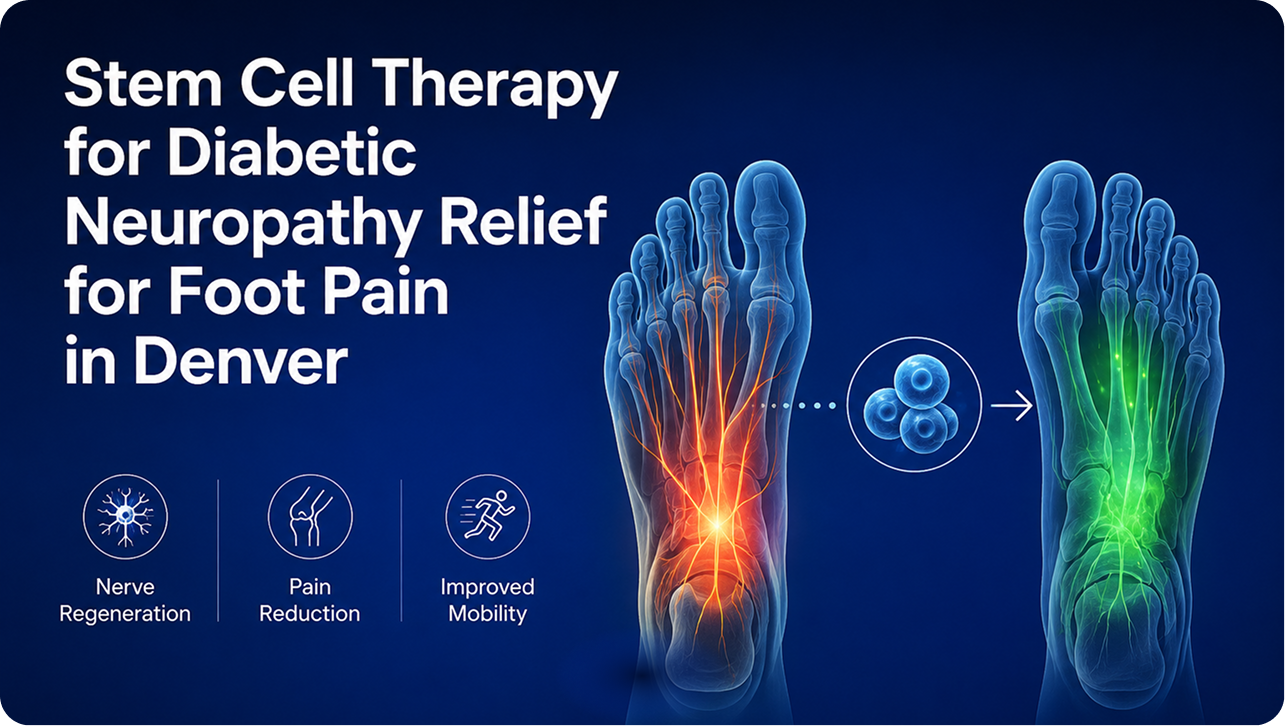
If you’re living with burning, tingling, numbness, or stabbing pain in your feet from diabetic neuropathy, you’re not alone. Diabetic peripheral neuropathy is a common complication of diabetes that can affect sensation, mobility, sleep, and quality of life.
At Cendant Stem Cell Center in Denver, regenerative medicine is being explored as a potential approach for patients looking beyond conventional symptom management.
In this article, we’ll look at diabetic peripheral neuropathy, conventional treatment options, the potential role of stem cell-based therapies, current research, and what patients should consider before pursuing treatment.
What Is Diabetic Peripheral Neuropathy?
Diabetic peripheral neuropathy occurs when prolonged exposure to elevated blood glucose contributes to damage involving peripheral nerves, particularly those in the feet and legs.
You can learn more about peripheral neuropathy on our Peripheral Neuropathy treatment.
Common symptoms may include:
- Burning or electric-shock-like pain
- Numbness or reduced sensation
- Tingling or “pins and needles”
- Increased sensitivity to touch
- Difficulty sensing temperature or injury
- Balance problems
- Changes in walking ability
Over time, diabetic neuropathy can interfere with mobility, sleep, exercise, and everyday activities.
Early evaluation and appropriate diabetes management are important because untreated nerve damage can increase the risk of foot injuries and other complications.
Why Conventional Treatments May Not Be Enough for Everyone
Treatment for diabetic neuropathy often focuses on controlling blood glucose, managing underlying risk factors, protecting the feet, and reducing symptoms.
Medications such as gabapentin or pregabalin may be prescribed to help manage neuropathic pain. However, these medications do not necessarily reverse established nerve damage, and some patients experience side effects such as dizziness, drowsiness, or other medication-related symptoms.
Other approaches may include:
- Blood glucose management
- Lifestyle modifications
- Physical activity when medically appropriate
- Foot care and monitoring
- Prescription medications for neuropathic pain
- Treatment of underlying vascular or metabolic problems
For patients who continue to experience significant symptoms despite conventional approaches, regenerative medicine may be an option worth discussing with a qualified healthcare professional.
A Regenerative Approach: Umbilical Cord-Derived MSCs and Microvascular Tissue
Cendant’s regenerative medicine protocols may incorporate human umbilical cord tissue-derived mesenchymal stem/stromal cells (HUCT-MSCs) and other biological products.
Learn more about HUCT-MSCs in our HUCT-MSC educational resource.
How Might Stem Cells Help?
Researchers are studying MSCs because of their potential ability to interact with surrounding tissues and influence inflammatory and repair-related pathways.
Potential areas of interest include:
- Modulation of inflammatory responses
- Release of signaling molecules
- Support of tissue repair
- Potential effects on nerve-supporting cells
- Potential influence on blood-vessel formation and vascular health
It is important to note that the mechanisms of cell-based therapies are complex and continue to be investigated. Stem cells should not be described as a guaranteed way to regenerate damaged nerves.
What Is Microvascular Tissue?
Microvascular tissue products are designed to provide biological tissue components that may support vascular and tissue environments.
Cendant may incorporate microvascular tissue products into certain regenerative treatment protocols. The specific products and protocols used depend on the patient’s medical evaluation and treatment plan.
Patients should ask their healthcare provider about the exact source, processing, regulatory status, and intended use of any cellular or tissue-based product before treatment.
Real Patient Experience: A Significant Improvement in Foot Pain
Patient experiences can help illustrate why some people explore regenerative medicine after conventional treatments have not provided sufficient relief.
One anonymized example involves a 63-year-old male with longstanding diabetic foot neuropathy.
He had previously tried conventional pain management, including gabapentin, but reported limited relief and unwanted side effects.
After undergoing a regenerative treatment protocol at Cendant involving umbilical cord-derived cellular products and microvascular tissue, he reported a substantial reduction in foot pain within the following weeks.
He also reported improvements in sensation and mobility and was able to reduce his reliance on pain medication under appropriate medical guidance.
Important Note About Patient Outcomes
Individual patient stories are not a guarantee of treatment results.
Responses to regenerative therapies can vary significantly depending on factors such as:
- Duration and severity of diabetes
- Blood glucose control
- Severity of nerve damage
- Circulation
- Overall health
- Medications
- Lifestyle
- Treatment protocol
Patients should discuss realistic expectations with their healthcare provider before treatment.
What Does Research Say About Stem Cells and Diabetic Neuropathy?
Research into cell-based therapies for diabetic neuropathy is ongoing.
A 2024 systematic review of human studies evaluated evidence surrounding stem cell therapies for diabetic neuropathy and reported improvements in several neurological outcome measures across the studies reviewed.
Areas investigated included:
- Motor nerve conduction
- Sensory nerve conduction
- Vibration perception
- Clinical neuropathy scores
- Other measures of nerve function
These findings are encouraging, but they should be interpreted carefully.
Different studies use different cell sources, doses, treatment methods, and patient populations. As a result, research findings cannot automatically be applied to every stem cell protocol or every patient.
Larger, well-controlled clinical trials are still needed to establish the long-term effectiveness and determine which patients are most likely to benefit.
Potential Benefits Being Studied
For patients who respond to treatment, potential benefits may include improvements in several areas.
Neuropathic Pain
Some studies have reported reductions in neuropathic pain following cell-based treatments.
Sensory Function
Researchers have investigated changes in measures of sensory nerve function and vibration perception.
Mobility
Reduced pain and improved sensation may make movement and everyday activities easier for some patients.
Quality of Life
Better symptom control may potentially support improvements in sleep, activity, independence, and overall quality of life.
Circulation and Tissue Health
Researchers are also studying whether regenerative approaches can influence vascular and tissue environments associated with diabetic neuropathy.
Why Denver Patients Choose Cendant Stem Cell Center
Cendant Stem Cell Center focuses on individualized regenerative medicine protocols based on each patient’s condition, medical history, and treatment goals.
Patients may choose Cendant because of its focus on:
- Personalized regenerative medicine protocols
- Experienced medical professionals
- Regenerative orthopedics and neurological applications
- Patient-centered care
- Evidence-informed treatment approaches
- Comprehensive consultations
Is Stem Cell Therapy Right for Diabetic Neuropathy?
Stem cell therapy for diabetic neuropathy is an emerging area of regenerative medicine, and research is continuing to determine its effectiveness and long-term benefits.
It should not be considered a guaranteed cure for diabetic neuropathy or a replacement for diabetes management, foot care, or conventional medical treatment.
If you have persistent burning, numbness, tingling, or pain in your feet, a medical evaluation is important. Your healthcare provider can determine the cause of your symptoms and discuss appropriate treatment options.
For patients interested in regenerative medicine, a consultation can help determine whether a cell-based treatment may be appropriate for their individual situation.
Ready to Explore Your Options?
If diabetic neuropathy is affecting your ability to walk, sleep, exercise, or enjoy everyday life, Cendant Stem Cell Center can help you understand your available options.
Contact Cendant Stem Cell Center in Denver to schedule a personalized consultation.
Learn More About Cendant Stem Cell Center
Denver, Colorado : 720.338.4491
Frequently Asked Questions
Can Stem Cells Treat Diabetic Neuropathy?
Stem cell therapy is being studied as a potential treatment for diabetic neuropathy. Early research is promising, but more high-quality clinical evidence is needed to determine effectiveness and long-term outcomes.
Can Stem Cells Regenerate Damaged Nerves?
Researchers are investigating whether certain cell-based therapies can influence nerve repair and the surrounding tissue environment. However, nerve regeneration is complex, and treatment should not be presented as guaranteed nerve regrowth.
How Quickly Can Stem Cell Therapy Improve Neuropathy Symptoms?
Results vary significantly between patients. Some patients may report changes within weeks, while others may experience little or no improvement. There is no guaranteed timeline.
Is Stem Cell Therapy a Cure for Diabetic Neuropathy?
No. Stem cell therapy should not be considered a guaranteed cure. Diabetes management, blood glucose control, foot care, and appropriate medical treatment remain important components of managing diabetic neuropathy.
What Are the Risks of Stem Cell Therapy?
Potential risks vary depending on the specific cellular or tissue-based product and how it is administered. Patients should discuss potential risks, benefits, alternatives, and the regulatory status of the treatment with a qualified healthcare professional.
How Do I Know If I Am a Candidate?
A medical professional can review your symptoms, diabetes history, nerve function, circulation, overall health, and previous treatments to determine whether regenerative therapy may be appropriate.
Medical Disclaimer
This article is provided for educational and informational purposes only and is not intended to provide medical advice, diagnosis, or treatment recommendations.
Stem cell and regenerative medicine treatments are an evolving area of research. Individual results vary, and no specific outcome can be guaranteed.
Patients with diabetic neuropathy should continue appropriate diabetes management, foot care, and medical follow-up. Always consult a qualified healthcare professional regarding your specific condition and treatment options.